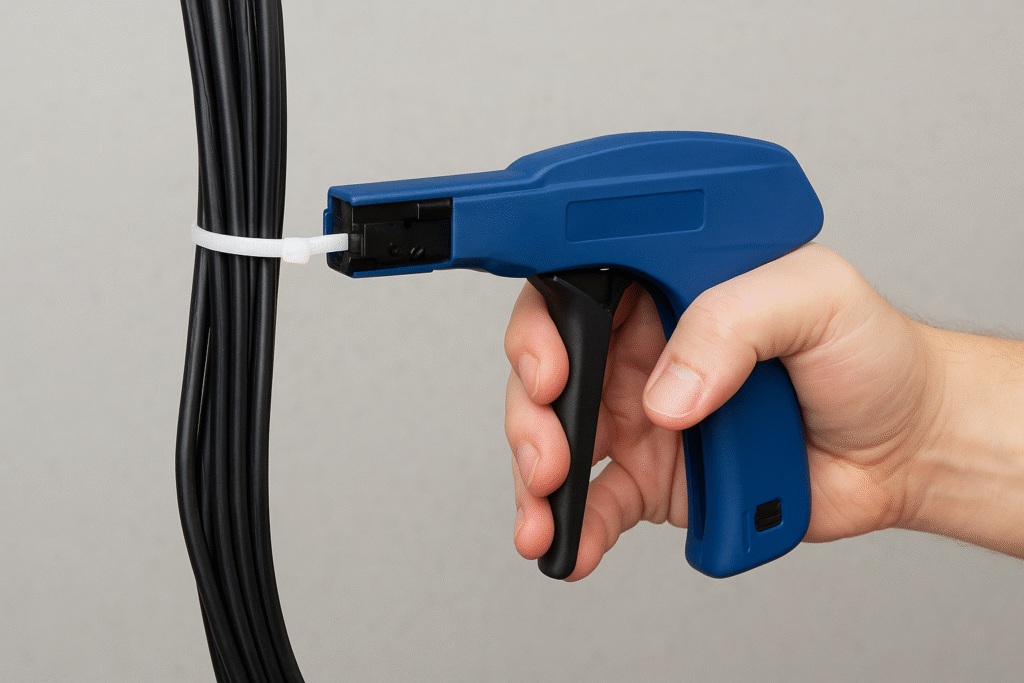
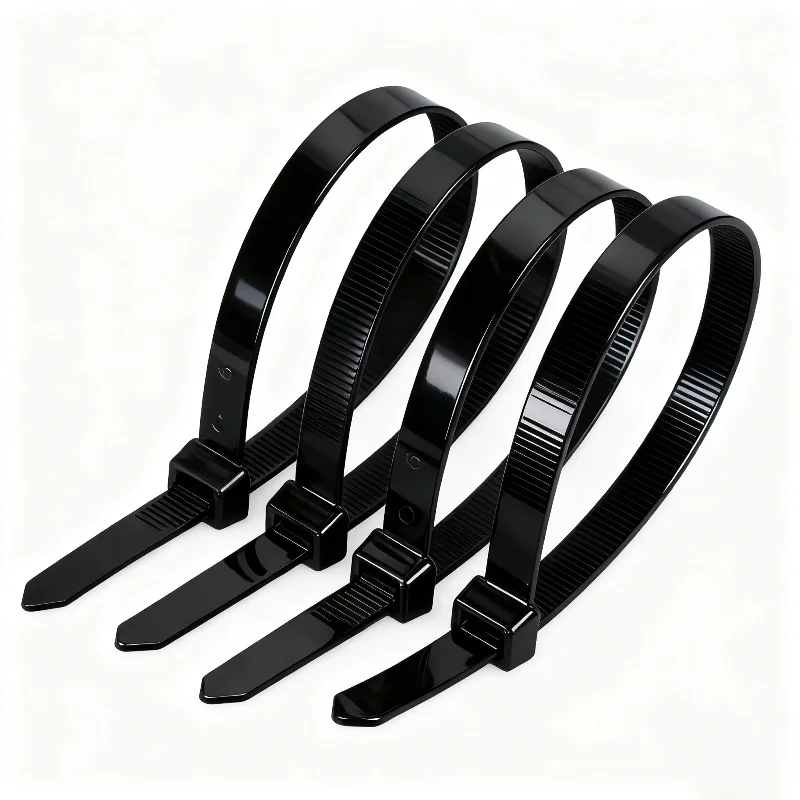
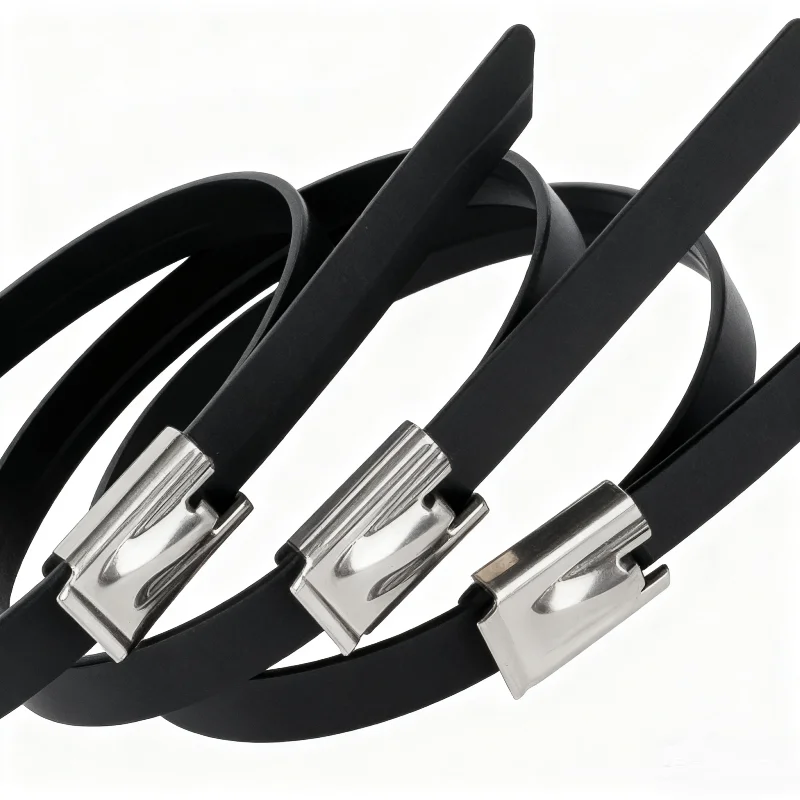
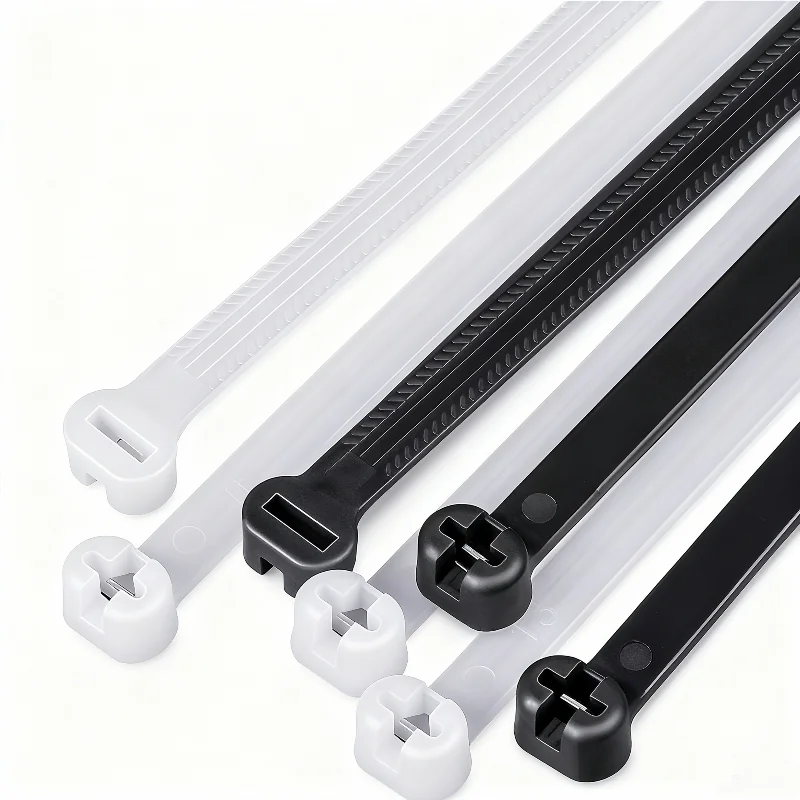
Cable tie gun is a professional tool designed to quickly and precisely complete cable tie installation. Users can preset the desired tension level, and when the tie reaches that tension, the tool automatically cuts off the excess tail, ensuring consistent tightness and a clean cut every time. Whether in electrical wiring, automotive harness assembly, industrial production, or general equipment maintenance, using cable tie guns helps improve work efficiency and operational safety.
2. Working Principle
The internal structure of a cable tie gun consists mainly of three modules: a locking mechanism, a tension control unit, and a cutting assembly.
During use, the operator inserts the tail end of the cable tie into the tool’s front opening. The internal transmission mechanism—usually gear or slider-driven—tightens the tie continuously. When the preset tension is reached, the cutting mechanism is triggered to trim the excess part, creating a smooth cut.
This complete “tighten–lock–cut” process ensures uniform tension for each bundle. It eliminates uneven tension caused by manual operation and prevents burrs from uneven cuts, improving appearance and long-term reliability.
3. Common Types and Applications
Power Source
Type
Operation
Applications
Advantages
Disadvantages
Manual cable tie gun
Hand trigger with adjustable tension
Electrical wiring, maintenance, home DIY
Low cost, portable, no power required
Labor-intensive, lower efficiency
Pneumatic automatic cable tie gun
Driven by compressed air, controlled by valve
Automotive assembly, production lines
Fast, low effort
Needs air compressor, limited mobility
Cable tie gun electric
Motor-driven, one-button operation
Electronics manufacturing, mass harness production
Select cable ties and tools suitable for the bundle size. Check the cutting blade; if adjustable, preset the tension value.
Installing the Tie
Insert the serrated end of the tie into the gun slot, straighten the tail, and feed it through the guide channel until a “click” confirms it’s locked.
Bundling
Wrap the tie around the object and engage the head into the lock. Squeeze the handle evenly until the tool stops automatically at the preset tension.
Cutting
Keep the trigger pressed; the tool will cut off the excess tail automatically. Release and inspect the tie for proper tension and smooth cut.
Post-Use Maintenance
Remove debris, reset the tension knob, and lubricate moving parts regularly.
Safety Tips
Keep fingers away from moving parts. Do not exceed rated tension. Never use a standard cable wire tie gun on load-bearing ropes.
5. Blade Replacement and Maintenance Tips
Replacement Steps
Ensure the tool is disconnected from power or air. Use the supplied wrench to remove the screw and old blade.
Clean the blade seat and insert the new blade with the correct orientation. Tighten the screw, test run without load, and confirm smooth operation.
Maintenance Guidelines
After each use, blow off debris and lubricate moving parts monthly.
Release tension before long-term storage and keep the tool in a dry box.
Stop use and replace the blade if cutting resistance increases or burrs appear.
Precautions
Wear protective gloves during maintenance. Do not use worn blades. Always use original replacement blades for each model.
6. Comparison of Different Binding Methods
Binding Method
Tension Consistency
Efficiency
Cut Quality
Effort
Safety
Manual tying (no tool)
Low, depends on operator skill
Low, time-consuming
Unreliable, uneven cuts
High, tiring
Low, risk of cuts from sharp edges
Manual wire tie gun
Medium, preset tension improves consistency
Moderate
Smooth, burr-free
Moderate effort
High, safer cuts
Pneumatic automatic tie wrap gun
High, stable tension via air pressure
High, suited for assembly lines
Smooth cut
Low effort
High, requires safe air supply
Electric automatic wire tie gun
Very high, motor ensures precise repetition
Very high, one-touch operation
Excellent, smooth cut
Minimal effort
High, built-in safety circuits
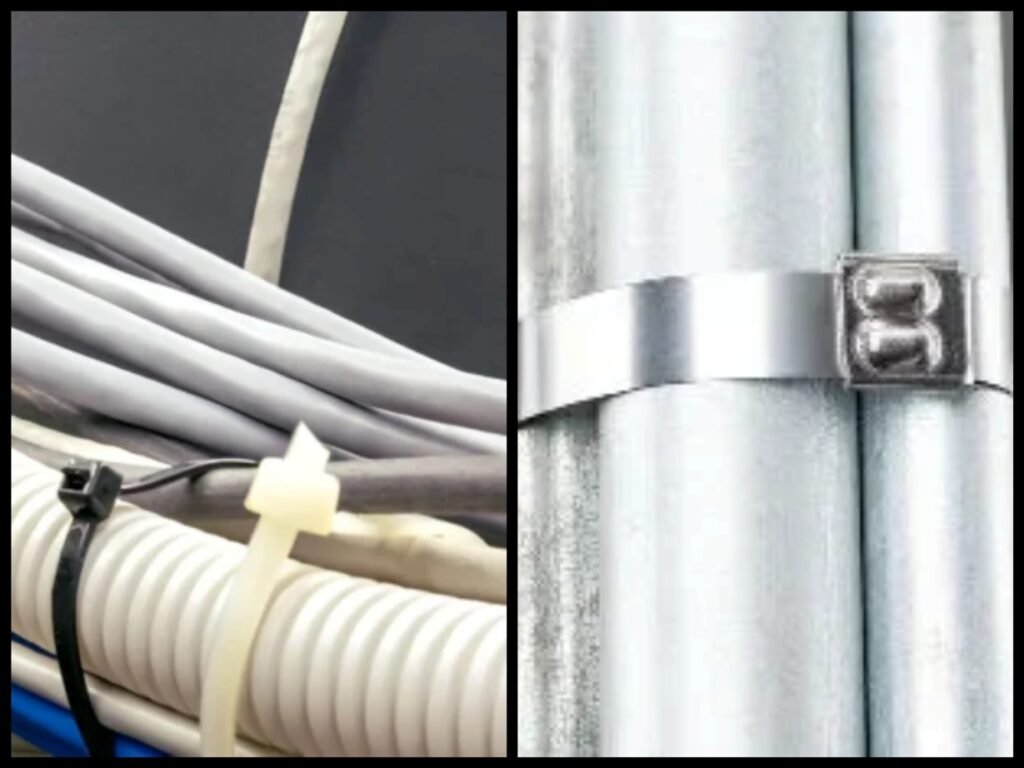
Metal cable tie gun
Medium, designed for heavy-duty locking
Medium
Good for metal ties
High effort
Medium, beware sharp edges
Summary: For efficiency and quality, electric and pneumatic auto zip tie guns are best for mass work. Manual zip tie guns balance cost and portability. Metal tie guns suit harsh environments and heavy loads. Manual tying should be used only in emergencies.
7. FAQ
Q1: Can a Cable Tie Gun be used on stainless steel cable ties? A: Yes, but you must use a dedicated ss cable tie gun, which can withstand higher tension and is equipped with a metal cutting blade.
Q2: Which is better, a manual cable tie gun or a cable tie gun electric? A: If you handle large volumes or need continuous production, electric or pneumatic models are more efficient; for routine maintenance, a manual type is sufficient.
Q3: How to extend the service life of a wire tie gun? A: Regular cleaning, proper lubrication, avoiding use beyond cable specifications, and replacing blades periodically will help extend its lifespan.
Q4: What is the cable tie gun price? A: Prices vary depending on type and model, and should be determined based on actual requirements.
8. Conclusion and Recommendations
The wire tie gun is an essential tool for efficient and professional cable harness fastening. It ensures consistent tension and smooth cuts while improving safety and reducing operator fatigue. Choosing the right model and setting the correct tension are key to optimal performance and cost control. Whether in electrical assembly, equipment manufacturing, or on-site maintenance, mastering the tie wire gun is fundamental to ensuring quality and efficiency.
INTRODUCTION: Why Cable Tie Price Matter in 2025 Whether you’re a purchaser, project manager, or individual user, knowing the current cable tie price can help you save money and choose the right product. The price of cable ties is influenced by several factors, such as material, size, packaging requirements, and quantity purchased. In this article, we’ll take you […]
Nylon tie wire breakage is a frequent problem in industries ranging from automotive to electronics. Although nylon ties are small, their failure can cause equipment malfunctions and safety risks. Understanding the causes of nylon tie breakage—from materials and manufacturing to storage and application—is key to preventing costly issues. Influence of the material itself Raw material […]
Introduction As a practical fastening tool, cable ties play an important role in households, industries, electronics, and electrical applications. Whether organizing wires, bundling items, or providing secure fastening in complex environments, cable ties demonstrate adaptability and reliability. Depending on the specific use scenarios, cable ties vary in material, design, and function. In this article, we […]
We use cookies to enhance your browsing experience, serve personalised ads or content, and analyse our traffic. By clicking "Accept All", you consent to our use of cookies.
Looking For High Quality Nylon Cable Ties At A Great Price?
Order now to experience cost-effective cable tie products that provide convenience and protection for your work and life.