Product Blog
Advantages of colored cable ties
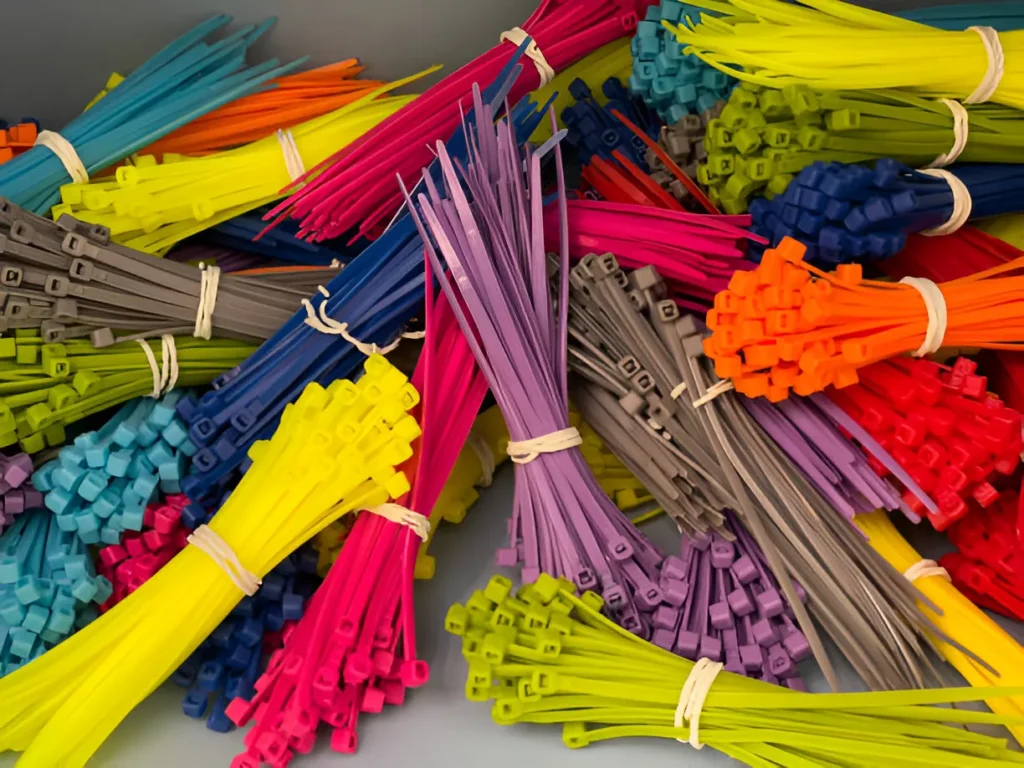
Have you ever struggled with organizing and identifying […]
阅读更多
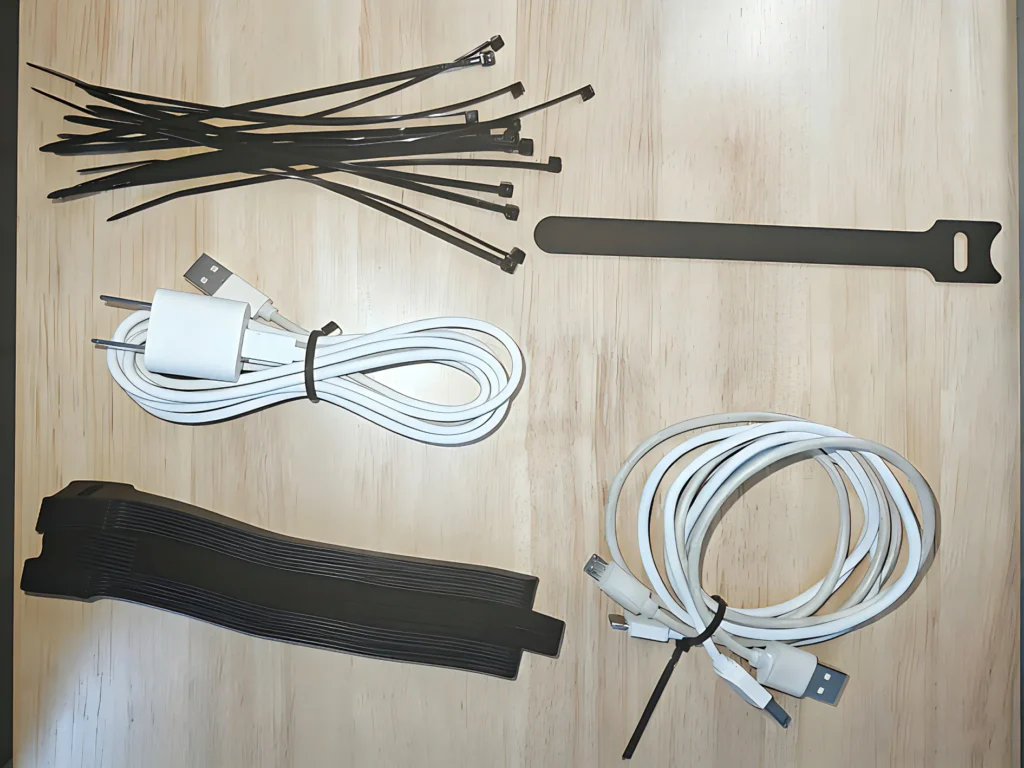
Before diving into tensile strength or UV resistance, it’s crucial to understand exactly what we are working with. At WANDU, we manufacture both solutions because we know that no single tool fits every job. Choosing between a nylon cable tie and a Velcro strap isn’t about which is “better”—it’s about which is right for your specific environment.
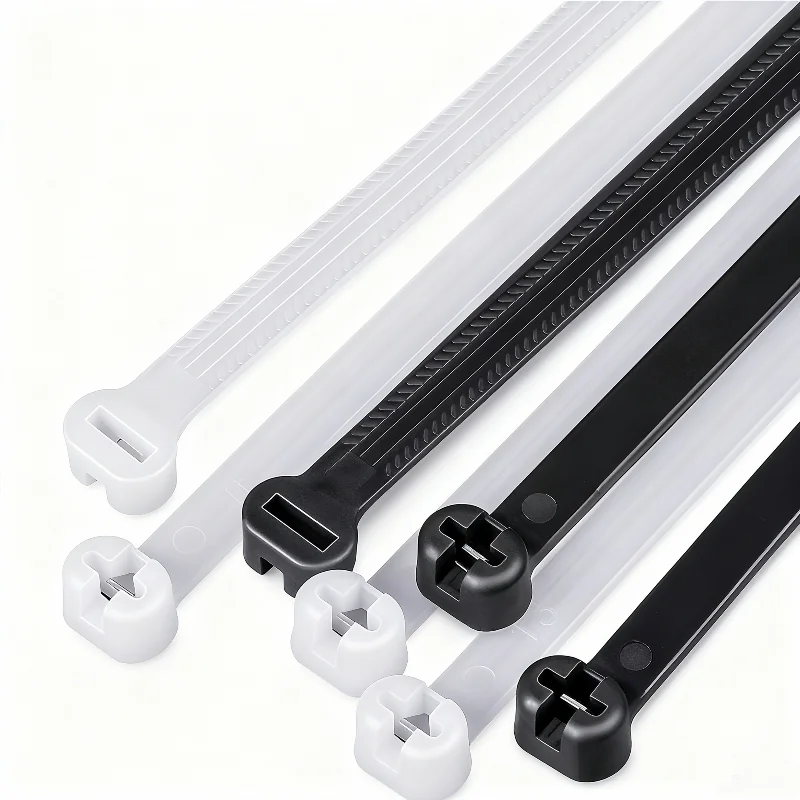
When you need permanence and security, nylon cable ties (often called zip ties) are the industry standard. Manufactured from high-grade
When deciding between traditional cable ties and Velcro straps, the choice usually comes down to the specific demands of your environment. We manufacture both at Wandu, but they serve very different masters. Here is how they stack up in the field.
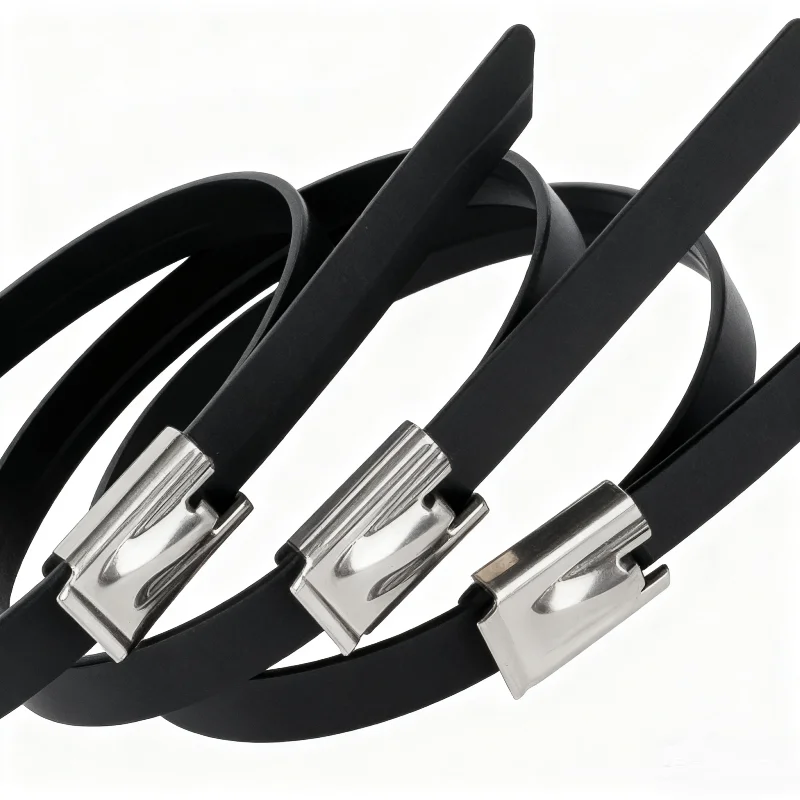
If your project requires holding heavy conduit or securing loads against vibration, nylon cable ties are the undisputed winner. A standard industrial-grade PA66 nylon tie provides significant tensile strength, often ranging from 18 lbs for miniature ties up to 250 lbs for heavy-duty versions. For extreme load-bearing needs, our stainless steel options push that limit even further.
Velcro straps (hook and loop) are not designed for load-bearing. They rely on the shear strength of the fabric hooks engaging with the loops. While excellent for bundling wires together, they cannot support weight or withstand the high tension that a locking nylon pawl can.
A common issue in data centers is over-tightening. Standard nylon zip ties are rigid; if you pull them too tight with a installation gun, you risk crushing the jacket of sensitive Cat6 or fiber optic cables. This “crush” can degrade signal performance.
Velcro straps are naturally compliant. The soft fabric material makes it nearly impossible to over-tighten to the point of damaging the cable insulation. However, for those who need the security of nylon without the bulk or sharp edges, our low profile wire ties offer a safer middle ground with parallel entry heads that reduce snagging risks compared to standard ties.
Sustainability is a growing concern for many of our US clients.
This is where material science matters. Velcro straps are fabric-based. In outdoor environments, they can absorb water, rot, or get clogged with dust and sawdust, which renders the hook-and-loop mechanism useless.
Nylon and stainless steel cable ties are engineered for resistance.
| Feature | Nylon Cable Ties (PA66) | Velcro / Hook & Loop |
|---|---|---|
| Primary Strength | High Tensile (Locking) | Low Tensile (Gripping) |
| Best For | Permanent / Heavy Duty | Temporary / Adjustable |
| Outdoor Use | Excellent (UV/SS models) | Poor (Absorbs water/dirt) |
| Risk to Cables | High (if over-tightened) | Low (Soft material) |
| Reusability | No (unless Trigger type) | Yes (Infinite) |
When comparing cable ties vs velcro strap solutions, the decision usually comes down to permanence and environment. While hook-and-loop straps offer flexibility, they simply cannot match the sheer holding power and durability of a nylon cable tie in harsh conditions. As a manufacturer, we recommend choosing our nylon solutions when the job requires a “lock and leave” approach.
In high-vibration environments like factory floors or vehicle engine bays, fabric straps can loosen over time. You need industrial grade zip ties that provide a tight, non-slip grip. Our PA66 nylon ties are engineered to withstand significant tensile loads and resist the heat often found in automotive wiring harnesses.
For professional routing along machine frames or chassis, relying solely on the tie isn’t enough. We recommend using saddle cable tie mounts to anchor heavy bundles securely to the surface, preventing abrasion caused by movement.
Standard plastics and fabrics degrade quickly under the sun. A standard Velcro strap will eventually rot or lose its grip when exposed to the elements. For outdoor projects, you must use UV resistant cable ties.
We manufacture these specific ties with carbon black additives that actively block UV radiation. This ensures the tie remains flexible and strong for years, even in direct sunlight, making them the only viable choice for solar farms, telecommunications towers, and outdoor signage.
If you need to ensure a bundle hasn’t been messed with, a Velcro strap is the wrong tool—anyone can open and close it without leaving a trace. A standard nylon cable tie functions as a basic security seal. Once the pawl locks into the ratchet, it cannot be reversed; the tie must be cut to be removed. This makes them ideal for securing logistics crates, utility meters, and critical infrastructure where tamper evidence is required.
| Feature | WANDU Nylon Cable Tie | Velcro / Fabric Strap |
|---|---|---|
| Holding Power | High (Up to 250+ lbs) | Low / Medium |
| Security | Permanent / Tamper-Evident | Reusable / No Security |
| Heat Resistance | High (PA66 / Heat Stabilized) | Low (Melts/Degrades) |
| Outdoor Use | Excellent (UV Black models) | Poor (Absorbs water/UV damage) |
While our standard nylon ties are the industry standard for permanent locking, there are specific scenarios where a velcro strap (hook-and-loop) is the superior engineering choice. At WANDU, we manufacture these straps for environments requiring frequent access and adjustment without the waste of cutting and replacing plastic ties.
In high-density server environments, rigidity is actually a disadvantage. Data center cable management requires constant updates—adding new patch cords or rerouting fiber. A standard zip tie must be cut to be removed, creating debris and risking accidental damage to the cable jacket during removal.
Our hook-and-loop ties offer a “soft” hold. They prevent over-tightening, which ensures you maintain the geometry of twisted pairs in Cat6/Cat7 cables and protect fragile fiber optics. This is critical for maintaining signal integrity. For sensitive installations, pairing these straps with proper cable protection ensures long-term reliability.
For the home user or IT professional setting up a workstation, wire dressing is about aesthetics and flexibility. You might move a monitor, swap a gaming console, or replace a mouse. Using a permanent tie means you have to destroy your cable management to make a simple change.
Velcro cable straps allow for a “clean look” that is easily modified. They are ideal for bundling HDMI cables, power cords, and peripheral wires behind desks where components change frequently.
Unlike a single-use plastic tie, a velcro strap is inherently designed for reusable cable management. For mobile technicians, photographers, or anyone traveling with electronics, these straps keep laptop chargers and extension cords coiled neatly. They can be opened and closed thousands of times without losing grip strength.
Quick Guide: Where Hook-and-Loop Wins
| Application Scenario | Why WANDU Velcro Straps? | Key Benefit |
|---|---|---|
| Network Racks | No cutting tools required near cables | Prevents accidental cable damage |
| Fiber Optics | Zero crush force | Preserves data transmission speed |
| Gaming/Office Desks | Fully adjustable | Easy to add/remove devices |
| Mobile Equipment | Infinite reusability | Reduces waste and cost over time |
It is rarely a strict choice between cable ties vs velcro strap. In reality, most professional installers keep both in their toolkit because a complex wiring job usually has different zones with distinct requirements. As a manufacturer, we often see orders combining bulk PA66 nylon ties for infrastructure alongside rolls of hook-and-loop for the final touches. Using just one type often leads to either a messy setup that is hard to change or a bundle that lacks the necessary structural security.
The most effective way to utilize both tools is the “Trunk and Branch” strategy. This method leverages the high tensile strength of nylon where it counts and the flexibility of Velcro where it’s needed most.
When comparing cable ties vs velcro strap solutions, the decision often comes down to the raw data: holding power, temperature resilience, and material longevity. As a manufacturer, we see distinct performance gaps between these fastening methods.
Below is a direct comparison of our standard Nylon 66 ties, heavy-duty stainless steel options, and flexible hook-and-loop organizers.
| Feature | Nylon Cable Ties (Standard) | Stainless Steel Ties (304/316) | Velcro / Hook-and-Loop |
|---|---|---|---|
| Primary Material | UL-approved Nylon 66 (PA66) | 304 or 316 Grade Steel | Nylon/Polyester Fabric |
| Tensile Strength | High (18 lbs – 250 lbs) | Extreme (Up to 350+ lbs) | Low (Bundling only) |
| Temp Resistance | -40°F to 185°F (-40°C to 85°C) | -76°F to 1000°F (-60°C to 538°C) | Moderate (Indoor standard) |
| Mechanism | Self-locking Pawl (Permanent) | Ball Lock (Permanent) | Hook & Loop (Reusable) |
| UV Resistance | Available (Black UV types) | Excellent (Native resistance) | Low to Moderate |
| Best Use Case | Permanent industrial/home wiring | Harsh outdoor/chemical zones | Data centers & temporary bundles |
Generally, no. We strongly advise against using standard nylon zip ties on fiber optic cables. Fiber is incredibly fragile; the glass core can crack under pressure, leading to significant signal loss or total failure. The rigid edge of a plastic tie can create “micro-bends” that ruin data transmission. For fiber optics and sensitive Cat6 cabling, Velcro straps or soft hook and loop cable organizers are the industry standard because they provide gentle, crush-free support.
It depends on the specific product. Standard consumer-grade Velcro straps are not designed for long-term outdoor exposure. UV rays and moisture will degrade the fabric loops and weaken the adhesive backing over time. However, there are heavy-duty Velcro straps specifically engineered for outdoor environments, often featuring UV-resistant materials. For permanent outdoor installations where security is paramount, UV-resistant nylon cable ties or stainless steel cable ties are usually the superior choice due to their higher tensile strength and weather resistance.
Over-tightening is the number one mistake people make. To avoid damaging wire insulation or crushing twisted pairs, use a tensioning tool with an adjustable cutoff setting. If you are installing by hand, pull the tie until it is snug against the cable jacket but still allows you to rotate the tie slightly around the bundle. If the tie is biting into the cable insulation, it’s too tight. Understanding how nylon self-locking cable ties work can help you gauge the right amount of force needed for a secure lock without causing damage.
For sheer volume and upfront material cost, nylon cable ties are significantly cheaper. You can buy thousands of zip ties for a fraction of the cost of Velcro. This makes them the go-to for massive industrial bundles or permanent runs in walls and ceilings. However, Velcro straps become more cost-effective in dynamic environments like server racks or photo studios where cables are constantly moved. Since they are reusable cable management tools, you don’t have to cut and replace them every time you make a change, saving money on replacement stock and labor in the long run.
Have you ever struggled with organizing and identifying […]
阅读更多
Cable ties, also known as zip ties, are versatile faste […]
阅读更多
Moisture significantly impacts nylon wire ties. This ar […]
阅读更多
 Chinese
  Arabic