


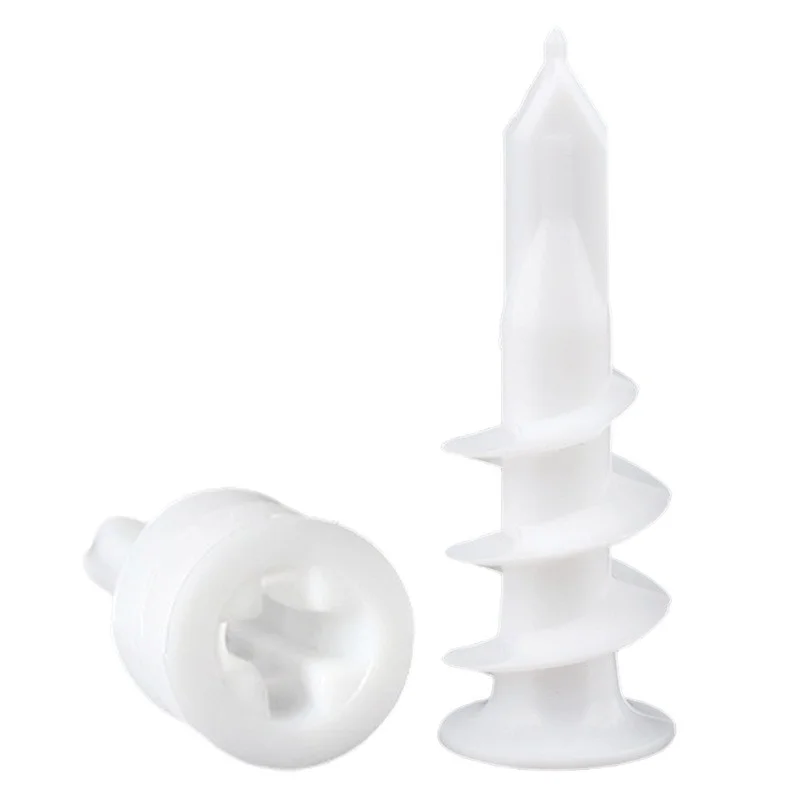


What are Self-Drilling Plastic Drywall Anchors?
Self drilling plastic drywall anchors are specialized fasteners designed to provide a secure mounting point in gypsum board without the need for a pre-drilled hole. These anchors feature a sharp, pointed tip and deep, wide threads that allow them to bite directly into the drywall, creating a tight fit that resists pulling out. They are the go-to solution for DIY enthusiasts and professionals who prioritize speed and reliability during installation.
Understanding the Design and Function
The core design of a self-drilling plastic drywall anchor revolves around its “corkscrew” geometry. Unlike traditional expansion anchors that require a drill bit, these units act as their own drill.
- Self-Drilling Tip: The pointed end pierces the paper surface of the drywall immediately.
- Large Outer Threads: These provide a high surface area to grip the fragile gypsum core of the wall.
- Internal Threading: Once the anchor is seated flush against the wall, it accepts a standard metal screw, which expands the anchor slightly for a locked-in fit.
This mechanism ensures that the load is distributed across a wider section of the drywall, preventing the crumbling or stripping common with inferior fastening methods.
Common Names and Terminology
In the hardware industry, these versatile fasteners are known by several names depending on the region and specific material composition. Understanding these terms helps in selecting the right product for your inventory or project:
- EZ Anchors: A popular brand-generic term referring to the ease of use.
- Screw-in Anchors: Highlighting the installation method using a screwdriver or power drill.
- Self-Drilling Nylon Drywall Anchors: Specifically referring to anchors made from high-strength nylon, which offers better heat resistance and durability than standard plastic.
- Wall Dogs or Zip Anchors: Common slang used by contractors for quick-install fasteners.
By utilizing self-drilling plastic drywall anchors, you eliminate the mess of drilling dust and the frustration of mismatched hole sizes, ensuring a professional finish every time.
Key Features and Advantages
Material Benefits of Premium Nylon vs. Plastic
We prioritize high-grade materials to ensure every self-drilling plastic drywall anchor performs under pressure. While basic plastic anchors often become brittle and snap during installation, our self-drilling nylon drywall anchors offer superior flexibility and heat resistance. Nylon handles the friction of high-speed drivers without melting or stripping. This focus on material integrity is the same standard we apply to our low-profile nylon cable ties, ensuring that the fastener remains secure even in high-vibration environments.
Weight Capacity and Load Limits
The load-bearing capacity of a self drilling plastic drywall anchor depends on the thickness of the gypsum board and the direction of the force. For most residential and commercial projects, these anchors provide a reliable hold for medium-duty items.
| Drywall Thickness | Max Shear Load (Vertical) | Max Pull-out Load (Tension) |
|---|---|---|
| 3/8″ Drywall | 35 lbs | 15 lbs |
| 1/2″ Drywall | 50 lbs | 20 lbs |
| 5/8″ Drywall | 75 lbs | 30 lbs |
Note: Always use 25% of the maximum load for a safe working limit.
Self-Drilling vs. Traditional Drywall Anchors
The primary advantage of these screw-in anchors is the elimination of the “pre-drill” step. Traditional anchors require a specific drill bit size and a hammer, which often leads to oversized holes and loose fits.
- Integrated Self-Drilling Tip: The sharp, wide-thread point acts as its own drill bit, cutting cleanly into the wall.
- Superior Grip: The deep threads bite into the gypsum, providing much higher pull-out resistance than smooth-sided expansion anchors.
- One-Tool Installation: You only need a Phillips screwdriver or a power driver to complete the job.
- Clean Removal: Unlike toggle bolts that fall behind the wall, these can be backed out cleanly, leaving a hole that is easy to patch and paint.
Product Specifications and Sizing Options
Choosing the right self drilling plastic drywall anchors depends entirely on the thickness of your wall and the weight of the object you are hanging. We provide a variety of sizes to ensure a flush fit and maximum hold.
Standard Screw Sizes and Thread Types
Most self-drilling nylon drywall anchors are engineered to pair with standard #6, #8, or #10 sheet metal screws. The internal thread of the anchor is designed to catch the screw’s threads tightly, expanding the anchor body slightly for a secure lock. The exterior features a coarse, deep-thread design that cuts its own path into the gypsum without requiring a pre-drilled hole.
| Anchor Size | Compatible Screw Size | Typical Shear Strength (1/2″ Drywall) |
|---|---|---|
| Mini / Small | #6 Screw | Up to 30 lbs |
| Standard / Medium | #8 Screw | Up to 50 lbs |
| Heavy Duty / Large | #10 Screw | Up to 75 lbs |
Anchor Length and Wall Thickness Compatibility
The length of the self drilling plastic drywall anchor must match the depth of your wall material to ensure the “pop” or “grip” mechanism functions correctly. While standard anchors are roughly 1 to 1.5 inches long, you should verify your drywall thickness before installation.
- 3/8″ Drywall: Requires standard short-body anchors to avoid hitting studs or insulation too early.
- 1/2″ Drywall: The most common residential thickness; compatible with almost all standard screw-in anchors.
- 5/8″ Drywall: Often found in commercial or fire-rated ceilings; requires a longer self drilling tip to fully penetrate and seat the threads.
- Clearance: Always ensure there is at least 1 inch of empty space behind the drywall to allow the anchor point to sit properly.
How to Install Self-Drilling Plastic Drywall Anchors
Installing self drilling plastic drywall anchors is a straightforward process that saves me a lot of time on the job. Because these are designed with a sharp self drilling tip, I can skip the messy step of pre-drilling pilot holes, which keeps the workspace much cleaner.
Tools Required for Easy Mounting
You don’t need a heavy-duty toolkit to get these screw-in anchors into the wall. To get the best results, I recommend having these basics ready:
- Phillips Head Screwdriver: A manual screwdriver offers the best control to prevent over-tightening.
- Power Driver: If you have many to install, a power drill on a low torque setting works well.
- Level and Pencil: Essential for marking your spots accurately before you commit to the wall.
Step-by-Step Installation Guide
- Mark the Wall: Use your pencil to mark exactly where the center of the anchor needs to go.
- Start the Anchor: Place the point of the self-drilling nylon drywall anchor against the mark.
- Screw it In: Apply firm pressure and turn the anchor clockwise. Continue until the head of the anchor sits perfectly flush with the drywall surface.
- Mount Your Item: Position your bracket or decor over the anchor. Drive the screw through the fixture and into the anchor. You will feel resistance as the nylon anchors expand behind the wall to lock in place.
For more professional mounting tips and hardware insights, I often share detailed guides on our product blog to help you choose the right fasteners for any home improvement task.
Common Installation Mistakes to Avoid
- Forcing it into a Stud: These plastic self drilling drywall anchors are designed for hollow walls. If you hit a wooden stud, stop immediately. Forcing it will only break the tip; you should use a standard wood screw for those spots instead.
- Over-Torquing: It is easy to get carried away with a power drill. If you spin the anchor too fast or too hard once it’s flush, you risk stripping the drywall, which significantly reduces the weight capacity.
- Using Incorrect Screws: Always use the screws that come with your premium nylon anchors. Using a screw that is too thick or has the wrong thread pitch can split the anchor before it properly seats in the wall.
Ideal Application Scenarios
Self-drilling plastic drywall anchors are the most efficient solution for mounting items when you cannot locate a wall stud. These anchors are designed for light to medium-duty tasks, providing a reliable grip in standard 1/2-inch or 5/8-inch gypsum board. Because they don’t require a drill bit for installation, they are the preferred choice for quick home repairs and professional finishing work.
Hanging Picture Frames and Lightweight Decor
For most interior decorating projects, self drilling plastic drywall anchors offer the perfect balance of speed and stability. They prevent the “wobble” often associated with nails and ensure your decor stays level over time.
- Gallery Walls: Ideal for hanging multiple frames where precision and minimal wall damage are required.
- Wall Clocks: Provides a secure mount for battery-operated clocks that might otherwise pull a nail out of the wall.
- Decorative Mirrors: Suitable for small to medium mirrors that fall within the anchor’s specific weight rating.
- Holiday Displays: Great for temporary or permanent mounting of wreaths and heavy garlands.
Mounting Small Shelves and Bathroom Fixtures
In high-moisture areas like bathrooms or high-traffic zones like kitchens, using self-drilling nylon drywall anchors ensures that fixtures remain flush against the wall even with frequent use.
- Bathroom Hardware: These are the industry standard for installing towel rings, toilet paper holders, and robe hooks.
- Kitchen Storage: Use them to mount spice racks, magnetic knife strips, or lightweight floating shelves.
- Electronics: Perfect for securing Wi-Fi routers, smart home hubs, smoke detectors, and security cameras.
- Closet Systems: Excellent for mounting belt racks, tie hangers, and small organizational bins.
When using these screw-in anchors, always verify the weight of your item against the load limit listed on the packaging. For items subject to constant downward pressure, such as a towel bar, these anchors provide the necessary shear strength to prevent the hardware from sagging or pulling through the drywall.
Choosing the Right Self-Tapping Anchor for Your Project
Selecting the correct self drilling plastic drywall anchors depends entirely on the specific demands of your job. I always recommend starting with a clear understanding of what you are hanging and the condition of your walls. Not all anchors are created equal, and picking the wrong one often leads to pulled-out screws or damaged drywall.
Assessing Your Wall Type and Weight Requirements
Before you grab a box of anchors, check your drywall thickness. Most modern homes use 1/2-inch or 5/8-inch panels. Self drilling plastic drywall anchors are designed specifically for these hollow-wall environments. If you try to use them in plaster or masonry, the self-drilling tip will likely snap or strip.
Weight is the next critical factor. I use a simple rule of thumb: never exceed 75% of the manufacturer’s rated “pull-out” tension to ensure a safety margin.
| Anchor Size | Recommended Max Weight (Static) | Best Use Case |
|---|---|---|
| Small (#6) | Up to 30 lbs | Small frames, smoke detectors |
| Medium (#8) | Up to 50 lbs | Bathroom towel bars, clocks |
| Large (#10) | Up to 75 lbs | Floating shelves, heavy mirrors |
Evaluating Top Rated Products and Customer Reviews
When I evaluate the best self-drilling nylon drywall anchors, I look for specific manufacturing details that separate professional-grade hardware from DIY-grade junk. High-quality premium nylon anchors offer better flexibility, meaning they won’t become brittle and crack over time like cheaper plastics.
- Tip Sharpness: A high-quality self drilling tip should be sharp enough to bite into the drywall immediately without “walking” across the surface.
- Thread Depth: Look for deep, aggressive threads. These provide the surface area needed to grip the gypsum core of the drywall securely.
- Material Integrity: I prefer nylon over standard plastic because nylon handles the heat generated by friction during installation much better, preventing the head from snapping off.
- Feedback: Check reviews for mentions of “pre-drilling.” If users say they have to pre-drill a hole for a “self-drilling” anchor, the product design is flawed. A true self drilling plastic drywall anchor should require nothing more than a screwdriver or a low-torque power drill.
By matching the anchor size to the load and choosing a nylon-based material, you ensure a permanent hold that won’t vibrate loose or fail under pressure.
 English
  Arabic
  Spanish