
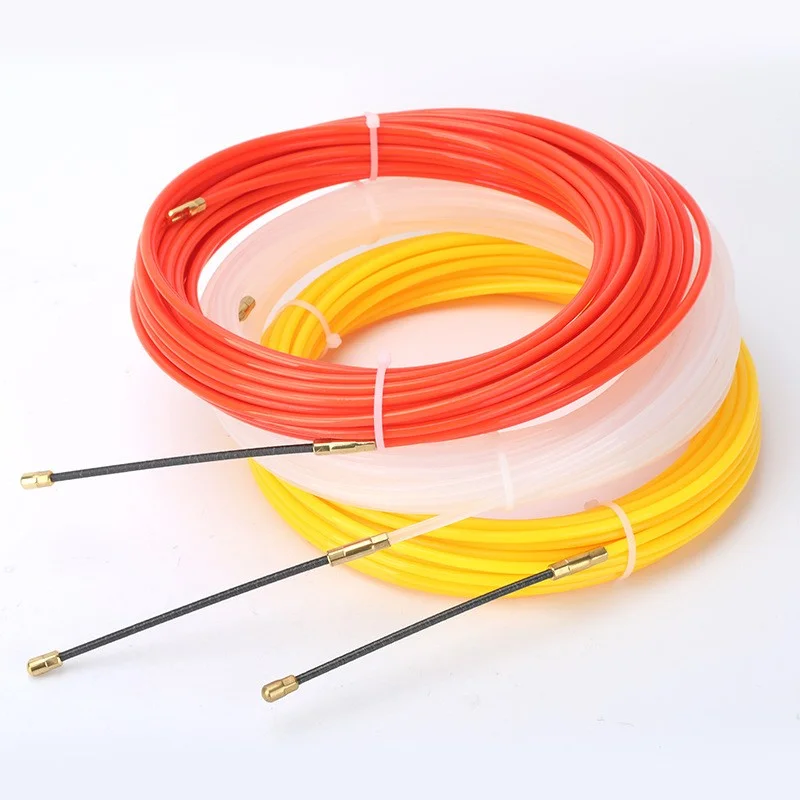
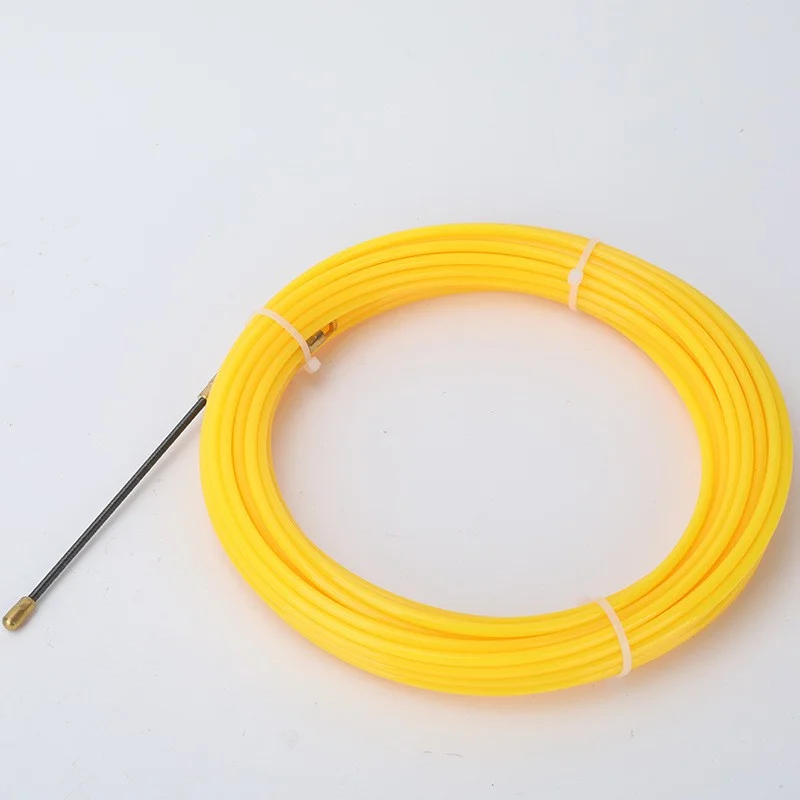

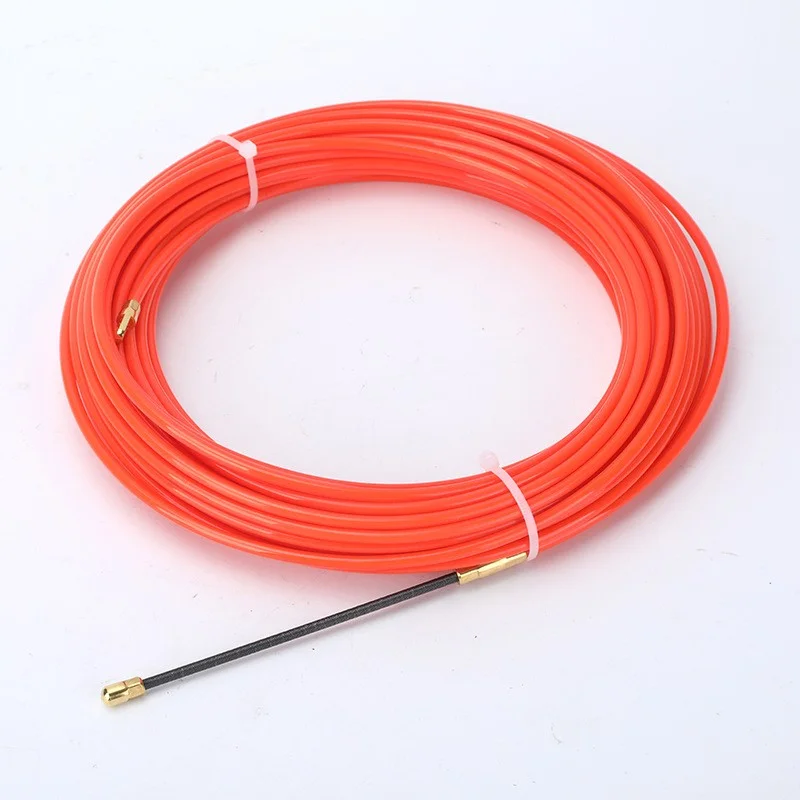


What is a Nylon Fish Tape?
A nylon fish tape is an essential cable routing tool utilized by electricians, telecommunication technicians, and network installers. This tool is specially engineered to maneuver in tight, confined areas, enabling technicians and professionals to effortlessly run new wiring through walls, electrical conduits, and PVC pipes. Constructed from tough, high-memory nylon material, it forms the essential foundation for efficient wire installation work. When you need a dependable cable pulling fish tape to route wires over long, complicated structural paths, nylon delivers the ideal combination of flexibility and rigidity for smooth pushing and guiding.
How Nylon Fish Tapes Work in Conduit
The operation of a fish tape cable puller is straightforward but highly effective, relying on simple push-and-pull mechanics to overcome friction in tight pipelines.
- Insertion: The leading edge of the tape is manually fed into one end of an empty or partially filled conduit.
- Navigation: Its slick, non-abrasive exterior allows the tape to glide smoothly around sharp bends, elbows, and corners without snagging.
- Attachment: Once the tape emerges at the target destination, the new electrical or communication cable is securely tied to the tape’s end loop.
- Extraction: The fish tape wire cable puller is subsequently reeled back, drawing the attached wiring safely and efficiently through the entire length of the conduit.
Key Components and Design
The structural integrity and performance of a fish tape nylon assembly rely on a few critical design elements. Each component is engineered for heavy-duty, daily commercial use.
| Component | Design Function & Benefit |
|---|---|
| High-Impact Housing | A rugged, drop-resistant plastic case equipped with an ergonomic handle for comfortable, controlled reeling. |
| Nylon Monofilament Core | The fish wire tape body resists kinking and retains its shape, offering superior memory over long distances. |
| Leading Eyelet (Hook) | A secure brass or steel tip located at the front of the tape allows for rapid wire attachment and helps guide the tape past internal conduit obstructions. |
| Winding Mechanism | An internal track and spool system ensures the tape dispenses and retracts smoothly without binding or tangling inside the casing. |
Key Advantages of Nylon Fish Tapes
When we supply nylon fish tape, we know our customers need tools that prioritize safety, flexibility, and speed on the job site. Here is why this material stands out for your everyday wire routing tasks.
Non-Conductive Electrical Safety
Working around live panels or existing wiring demands extreme caution.
- Zero Conductivity: A fish tape nylon build provides complete peace of mind during installations.
- Shock Prevention: It eliminates the risk of electrical shocks or shorting out sensitive equipment, making it the safest choice for active environments.
High Flexibility for Complex Bends
Conduit runs are rarely straight lines. You constantly face 90-degree elbows, junction boxes, and tight corners.
- Bends Without Breaking: Our cable pulling fish tape bends easily through complicated layouts without snapping or taking on a permanent kink.
- Navigates Tight Spots: It easily snakes through twisting pipe paths that would quickly trap a rigid steel alternative.
Smooth Gliding and Low Friction
Friction is your biggest enemy when routing long lines.
- Low Drag: Nylon naturally glides against the inside walls of both PVC and metal conduits without snagging.
- Less Effort: This smooth movement turns a tough fish tape wire cable puller job into a fast, low-strain task.
- Organized Finish: Once your wires are successfully pulled through the conduit, you can quickly bundle and secure the loose ends using durable black cable ties to keep the entire installation neat and professional.
<h2>Nylon vs. Other Fish Tape Materials</h2>
In our experience supplying tools to electricians and network technicians globally, picking the right material for your fish tape wire cable puller makes or breaks a job. While there are a few standard options on the market, a nylon fish tape often hits the sweet spot for safety, handling, and cost. Here is how it compares to the traditional alternatives.
<h3>Nylon vs. Fiberglass Fish Tapes</h3>
Both of these materials are non-conductive, which is excellent for safety, but they behave very differently inside a wall or conduit.
- Flexibility: Nylon is incredibly flexible. It easily navigates tight, complex bends and corners without snapping. Fiberglass is stiff; it pushes well in a straight line but is prone to snapping if forced around sharp angles.
- Durability: If you accidentally step on a fish tape nylon, it usually just bends and bounces back. Fiberglass, on the other hand, will easily splinter and break under pressure.
- Cost-Effectiveness: Nylon generally costs less upfront while offering a longer lifespan for standard residential and commercial wire routing.
| Feature | Nylon Fish Tape | Fiberglass Fish Tape |
|---|---|---|
| Flexibility | Extremely High | Low to Moderate |
| Durability | High (Bend-resistant) | Fragile (Can splinter) |
| Best Use | Complex, winding conduits | Long, straight, empty runs |
<h3>Nylon vs. Steel Fish Tapes</h3>
Steel is the old-school standard, but a modern cable pulling fish tape made of nylon provides some serious upgrades that directly address steel’s biggest flaws.
- Electrical Safety: This is the most critical difference. Steel is highly conductive. If you accidentally touch a live circuit, you risk a severe shock. Nylon is non-conductive, protecting you and the surrounding equipment.
—– * Weight and Glide: Nylon is significantly lighter. It glides smoothly through PVC pipes with minimal friction. Steel is heavy, can rust over time if exposed to moisture, and often scrapes or damages the inside of plastic conduits.
- Kink Resistance: Once a steel fish wire tape kinks, it is permanently damaged and nearly impossible to push smoothly again. Nylon easily coils and uncoils without permanently losing its shape.
After you finish using a reliable cable fish tape to run your new power or data lines, managing those bundles properly is the natural next step. We always recommend securing your newly routed setups with durable plastic tie cables to keep everything clean, organized, and compliant. Whether you are doing a short run or a complex wiring job, nylon simply offers a safer, smoother pull from start to finish.
Common Specifications and Technical Data
When we supply a nylon fish tape to our global partners, getting the right technical specifications is crucial for a smooth wire pull. Understanding these specs ensures your tool matches the job.
Standard Thickness and Diameters (e.g., 4mm)
The diameter directly impacts how well your cable pulling fish tape navigates corners. For everyday jobs, a 4mm thickness is the industry standard. It provides the perfect balance—stiff enough to push through long runs, yet flexible enough to glide around tight conduit bends without kinking.
Popular Length Options (e.g., 20m to 30m)
You never want your fish tape wire to come up short in the middle of a wall. While custom sizes exist, the 20m to 30m range is our most requested option. This length covers the vast majority of standard runs without adding unnecessary bulk to your workspace.
Tensile Strength and Load Capacity
Your fish tape cable puller needs to handle serious tension. Nylon offers excellent tensile strength, safely pulling standard wire bundles without snapping. Once your pull is successful, you will naturally move on to terminating and securing the wires, where protective solutions like shrink heat tube provide the perfect finishing touch to keep your connections safe.
Quick Technical Reference Table:
| Feature | Standard Spec | Practical Advantage |
|---|---|---|
| Tape Material | High-grade Nylon | Excellent fish tape for cable pulling with zero conductivity risk. |
| Diameter | 4mm | Fits standard conduits; resists buckling during pushes. |
| Lengths | 20m, 30m | Ideal for commercial and residential runs. |
| Core Function | Cable fish tape routing | High load capacity for smooth, heavy wire pulls. |
Typical Application Scenarios
Let’s look at where a nylon fish tape actually gets to work. Whether we are outfitting a new commercial office space or running wires through a home renovation, having a reliable fish tape cable puller makes the entire job faster and much less frustrating.
Residential and Commercial Electrical Wiring
For everyday electrical jobs in homes and commercial buildings, a nylon fish tape is my go-to tool. Pulling standard electrical wire through PVC or metal conduit can be a real headache if you hit a tight corner or a complex series of bends.
Thanks to its natural flexibility, a fish tape wire cable puller easily navigates these obstacles without getting stuck.
- Home Renovations: Perfect for fishing new lighting circuits, smart home wiring, or outlet upgrades behind finished drywall without causing damage.
- Commercial Builds: Safely routes heavy electrical lines through long, complex conduit systems. Once your circuits are successfully pulled, I always recommend organizing the runs using durable pa66 cable ties to keep the electrical panel clean and professional.
- Safe Maintenance: The non-conductive nature of a fish tape nylon adds a critical layer of safety when performing maintenance near existing, potentially live circuits.
Data, Telecommunication, and Network Installations
Low-voltage network jobs require a much lighter touch. When installing delicate data cables, telecommunication lines, or fiber optics, you absolutely cannot risk damaging the outer jacket of the wire. A dedicated cable pulling fish tape glides smoothly to prevent snags and friction burns.
- Network Upgrades: Efficiently running Cat5e, Cat6, or fiber optic cables through drop ceilings, server rooms, and raised floors.
- Telecommunication Lines: Guiding sensitive communication cables over long distances in large office networks.
- Audio/Visual Setups: Fishing speaker wire or coaxial cables through walls for clean, wire-free home theater or conference room installations.
Using a quality fish tape wire ensures these fragile low-voltage cables reach their destination fully intact. You simply don’t want a heavy, stiff tool tearing up your expensive network lines, which is exactly why a lightweight cable fish tape is the standard choice for IT professionals and telecom technicians.
How to Choose the Right Nylon Fish Tape
Picking the perfect nylon fish tape for your project comes down to a few core factors. Let’s break down exactly what you need to look for so you get the job done fast and right.
Matching Tape Size to Conduit Diameter
Your fish tape for cable pulling needs to fit the pipe perfectly. If the tape is too thick, it gets stuck in tight bends. If it is too thin, it will buckle when you try pushing it through a long run. Always match your tape diameter to your conduit size.
| Conduit Size | Recommended Tape Diameter | Best Use Case |
|---|---|---|
| 1/2″ to 3/4″ | 3mm – 4mm | Short residential runs |
| 1″ to 1-1/4″ | 4mm – 4.5mm | Commercial runs, data lines |
| 1-1/2″+ | 4.5mm+ | Heavy-duty cable pulling fish tape jobs |
Evaluating the Scope of Supply and Accessories
Don’t just look at the tape itself. A high-quality fish tape wire cable puller kit should come with the right accessories to make your work easier. Look for interchangeable pulling eyes, flexible spring leaders, and secure fasteners that grip the wire tightly. Once your run is successfully pulled, having the right gear extends to your final cable management—securing your newly run wires with durable plastic zip ties ensures your hard work stays neatly organized and safe inside the junction box or panel.
Maintenance and Storage Tips for Longevity
Taking care of your fish tape nylon tools ensures they stay flexible and last for years. Dirt, grit, and leftover conduit lube can severely wear down the material over time.
- Wipe it down: Clean your fish tape wire with a dry rag after every single use to remove debris.
- Store it right: Never force the tape into unnaturally tight loops. Let it rest in its natural shape inside the reel housing.
- Avoid extreme heat: Keep your fish wire tape stored away from direct sunlight or hot vehicles so the nylon does not become brittle and snap on your next job.
 English
  Arabic
  Spanish