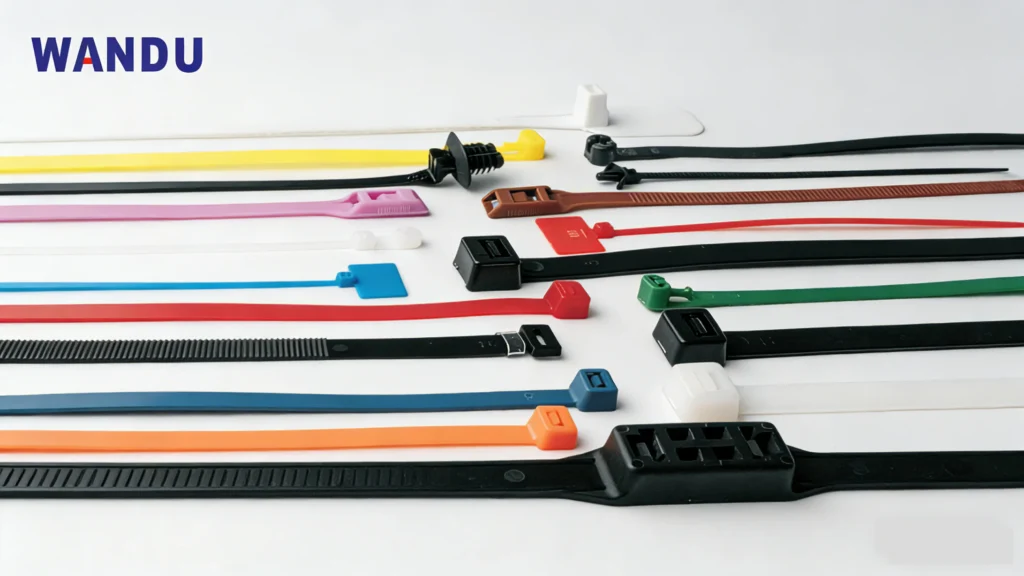
Have you learned about the types of zip ties? plastic ties for wires are widely used for cable bundling, item fixing, and packaging sealing due to their lightweight structure, durability, and ease of use. Choosing the appropriate zip tie plastic type helps improve work efficiency while ensuring safety and long-term performance. This article provides a detailed introduction to zip tie material and different type of cable ties, helping you make the right choice based on practical applications.
Common Materials of plastic ties for wires and Their Characteristics
The performance of plastic ties for wires largely depends on the material. Different materials vary in strength, temperature resistance, chemical resistance, and flexibility. The table below summarizes the core characteristics of four mainstream materials.
Material
Advantages
Disadvantages
Suitable Environment
Nylon 6
Cost-effective, good flexibility and impact resistance
Moderate temperature resistance (approx. -40°C to 85°C), slight strength reduction after moisture absorption
Indoor ambient environments, general bundling and fixing
Nylon 66
High strength, excellent abrasion resistance and temperature resistance (approx. -40°C to 105°C)
Higher cost than Nylon 6, lower moisture absorption
Outdoor environments, engine compartments, or applications with higher temperatures or mechanical friction
PP (Polypropylene)
Low density, lightweight, excellent chemical resistance, non-hygroscopic
Brittle at low temperatures, narrow temperature range (approx. 0°C to 80°C)
Humid environments, chemical industries, or food-related applications requiring lightweight bundling
Excellent flexibility and good low-temperature performance
Lower strength, poor high-temperature resistance
Low-temperature environments
Selection advice: For high strength and heat resistance, choose Nylon 66 zip tie material. If budget is limited and the environment is mild, Nylon 6 is a cost-effective option. For acidic, alkaline, or humid environments, PP is a suitable choice. PE material is recommended for low-temperature applications.
Zip Tie Types, Structural Features, and Applications
In addition to material, the structural design of wire ties plastic directly determines their application scenarios. Below is a detailed introduction to different types of zip ties.
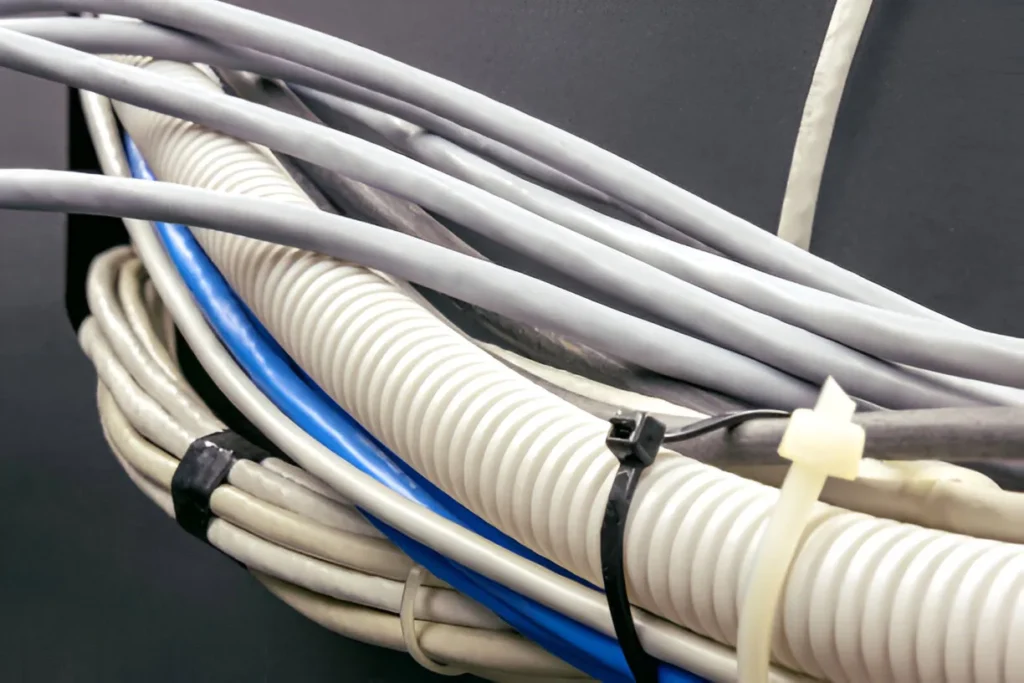
Structure: Classic self-locking design with a row of one-way angled teeth on the strap. The head contains a plastic pawl formed by a cantilever structure. When the strap is inserted into the head, the pawl engages the teeth with an audible click, achieving one-way locking that tightens further when pulled backward.
Applications: self locking cable tie is a general-purpose solution suitable for wire organization, gardening fixation, industrial cable management, and packaging sealing. The single-use design is also commonly used for simple tamper-evident sealing.
Structure: Based on the self locking cable tie, a release button is added to the head. Pressing the button disengages the pawl from the teeth, allowing easy and non-destructive removal.
Applications: reusable tie wraps are suitable for applications requiring frequent adjustment or maintenance, such as server cabinets, stage wiring, laboratory setups, and reusable warehouse organization.
Structure: Smooth and rounded head without sharp protrusions. After locking, the head forms a smooth surface with the strap, significantly reducing abrasion risk.
Applications: low profile tie wraps are designed for high-safety contact environments and are commonly used in automotive interior wiring, children’s toys, strollers, and concealed cable management in household appliances.
Structure: The head features a screw hole, allowing the base to be fixed to walls, panels, or racks with screws before inserting the tie.
Applications: tie wraps with screw hole are used for routed and suspended cable management, commonly seen in electrical control cabinets, network racks, and workshop cable tray systems to maintain neat wiring.
Structure: The locking pawl is made of high-strength stainless steel and engages with the nylon strap teeth. This design prevents creep and wear that may occur with plastic pawls under long-term stress or harsh environments, offering excellent corrosion resistance.
Applications: metal pawl zip ties are suitable for high-vibration, highly corrosive, and high-reliability environments such as marine vessels, chemical equipment, heavy vehicles, and permanent outdoor structures.
Structure: The head integrates a tag slot or transparent window for inserting printed labels or handwritten information. Some models offer color coding for easy visual identification.
Applications: cable tag tie is widely used in structured cabling and equipment management, including data center port identification, factory pipeline labeling, and telecom fiber and cable differentiation to improve maintenance efficiency.
Structure: Made of high-strength nylon with a one-time locking design. The locking head typically features a labyrinth or barbed structure that cannot be released by hand and must be cut to remove. Some models include unique serial numbers.
Applications: cable tie handcuffs are used for one-time fastening and sealing, such as electric meter boxes, cargo container seals, temporary law enforcement control, evidence sealing, and anti-theft applications.
8. Double Loop Tie Wraps
Structure: The strap forms a loop, allowing it to be placed around an object first and then tightened through the locking head, eliminating the need to thread from one end.
Applications: double loop wire ties are suitable for bundling looped objects or confined spaces, such as securing wheel covers, tightening barrel packaging, organizing loose cables, or fastening banners.
Structure: The strap surface features textured particles, stripes, or serrations for anti-slip performance, with enhanced friction on smooth surfaces.
Applications: zip ties for snow chains are used for bundling smooth surfaces such as glass, metal pipes, and tarps, and can also serve as temporary tire traction devices for emergency use on snowy or icy roads.
Structure: Composed of nylon beads connected by flexible links, resembling a bead chain. No traditional locking head; fixation relies on bead engagement or knotting.
Applications: beaded wire ties are suitable for gentle fixing and flexible adjustment, such as gardening plant support, cable organization, Christmas light bundling, and creative applications.
11. Push Mount Zip Ties
Structure: The head integrates a push-in mounting clip with flexible barbs. It is installed by pushing into pre-drilled sheet metal holes, where the barbs expand and lock without tools.
Applications: push mount wire ties are specifically designed for automotive wire harness assembly, enabling fast, secure, and vibration-resistant fixation in vehicle manufacturing and maintenance.
FAQ
How to choose the most suitable zip tie material based on the working environment?
Choose Nylon 66 for strength and heat resistance. Nylon 6 offers high cost performance for general indoor use. PP is ideal for chemical resistance or humid environments, while PE provides better flexibility in cold conditions.
What is the core difference between standard zip ties and reusable zip ties?
They are the most common cable tie types on the market. Standard zip ties are one-way locking and designed for permanent or single-use fixing. Reusable zip ties feature a release button that allows non-destructive removal and repeated use, making them suitable for applications requiring frequent adjustments.
Which types of tie wraps are designed for special safety or environmental requirements?
Low profile zip ties provide scratch-free safety protection and are commonly used in children’s playgrounds and infant products.
Which types of tie wire are commonly used for automotive wire harness assembly?
Push mount wire ties are specifically designed for this purpose. Their integrated mounting clips allow quick insertion into vehicle body holes, offering fast installation, strong fixation, and vibration resistance.
Conclusion
Although plastic ties for wires are small components, they play a critical role across various industries. From push mount zip ties that ensure vehicle safety to tag zip ties that protect data center organization, their specialized designs meet increasingly precise engineering needs. Understanding material differences and tie wrap types is essential for ensuring safety and improving organizational efficiency. It is recommended to request samples from suppliers for real-world testing before procurement to verify performance in actual application environments.
Introduction As a practical fastening tool, cable ties play an important role in households, industries, electronics, and electrical applications. Whether organizing wires, bundling items, or providing secure fastening in complex environments, cable ties demonstrate adaptability and reliability. Depending on the specific use scenarios, cable ties vary in material, design, and function. In this article, we […]
Introduction Do zip ties break in cold weather? This is a common question asked by outdoor engineers, installers, and purchasing managers. This ultimate guide will explain everything you need to know: the molecular reasons behind brittleness in plastics, the cold-weather performance of different materials, application scenarios, best installation and storage practices,and low-temperature testing methods. By […]
Choosing the best zip ties for your project can be challenging, especially with so many options available. But don’t worry—we’ll guide you through selecting the best wire ties for various uses, including automotive, construction, and home projects. Using the wrong type of cable tie can lead to inefficiencies, so it’s important to choose wisely. Here […]
We use cookies to enhance your browsing experience, serve personalised ads or content, and analyse our traffic. By clicking "Accept All", you consent to our use of cookies.
Looking For High Quality Nylon Cable Ties At A Great Price?
Order now to experience cost-effective cable tie products that provide convenience and protection for your work and life.





 English
  Arabic
  Spanish